
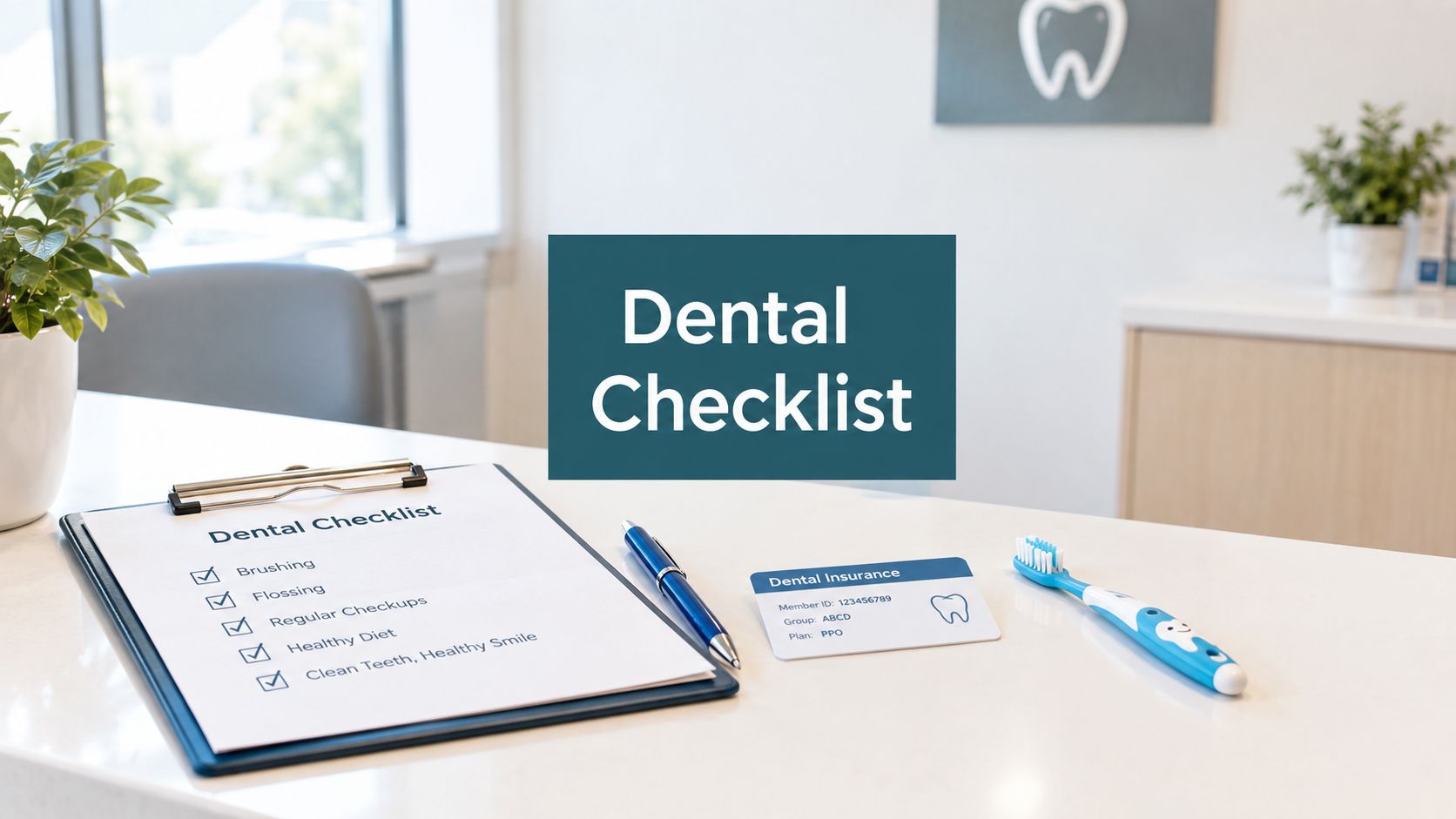
A gap of several years is common, and returning to dental care usually follows a set order. Before anyone looks at your teeth, there is paperwork to settle: find your old records if you have them, list any medications you take, and confirm what your insurance or payment arrangement will cover. The steps below build on one another, starting at home. Taken in order, they keep the first visit predictable and the costs visible from the start.
Gather your records before you book
The appointment depends on information you supply, and much of it has to be gathered before you book. A dentist cannot judge your teeth properly without knowing what has changed in your body since the last visit. Some medications affect bleeding and healing, and conditions like diabetes or pregnancy change what treatment is sensible. Gum disease also interacts with diabetes and heart disease, so the history runs both ways. For a routine visit, write everything down before you call, and bring the list with you to the appointment, because memory often fails in the chair. If you have a sudden toothache or severe pain, call the clinic promptly instead of waiting to finish the list.
Your list should cover:
- every medication and supplement you currently take
- health changes since your last visit, such as pregnancy, diabetes or a heart condition
- smoking and drinking habits
- anything in your mouth that hurts, bleeds or feels sensitive
- the name of your previous practice, so old X-rays can be requested
Add a short symptom diary to that list. Note when the pain happens, whether hot or cold drinks set it off, and whether you wake with a sore jaw from grinding. Some treatments change depending on what you take, so the dentist can plan only around what they know. Old X-rays can give the new dentist a starting point, and comparing them with fresh images may show changes in decay or bone levels. If you cannot get them, tell the clinic so the dentist can decide what records or images are needed.
Check the costs before the day
Cost is one of the main reasons people stay away, so for a routine visit, settle it in the weeks before the appointment. Call your insurer and confirm what your policy covers, what your annual limit is, and what you can claim for a check-up with X-rays. Then ask the clinic two things: what the first visit costs in full, and whether they bill your insurer directly. Many practices claim on the spot through systems such as HICAPS, so you pay only the gap on the day.
The examination and the X-rays are often billed separately from the cleaning, so ask for the complete first-visit figure. If you don’t have insurance, the same questions still apply: ask what the examination and images cost, and what the cleaning adds. Request an itemized quote before agreeing to anything beyond the examination, and bring your insurance details with you. If a clinic hesitates to put prices in writing, that is worth knowing before you sit in the chair.
Choose a clinic set up for a long-overdue visit
For a return visit, look for a clinic that states two things plainly: it treats nervous patients, and it explains fees before treatment. Ask the practice about options for managing anxiety, whether it can plan treatment in stages and how it answers cost questions. A family-friendly practice focused on prevention can help you explain what kept you away and plan a return visit. If you live nearby, you can call a Dentist in Cannington to discuss any concerns and ask what the first visit will cover.
When you call to book, say two things clearly: how long it has been, and that you feel nervous. Ask whether the first appointment covers the examination alone or the cleaning as well, and how long the slot runs. Some clinics can book a longer first visit for a returning patient if asked in advance. That extra time allows an unhurried examination and a proper conversation afterward.
The examination comes before any treatment
The first appointment starts with your list. The dentist reads your history, asks about anything that hurts, then examines each tooth, the existing fillings, your bite and the soft tissues of the cheeks and tongue. This oral examination helps guide what follows. You may feel the mirror and probe, and you can ask before the visit whether any treatment is planned for the same appointment. A good dentist describes what they see without commentary on why it happened.
After the visual check, the dentist may recommend X-rays to see areas between teeth or below the gum line. Bitewing X-rays show decay between the back teeth and the level of the bone holding them. A panoramic image maps the roots and jaw, including any wisdom teeth, in one pass. Which images you need is the dentist’s call, made after reviewing your old records against what the examination just found. Digital X-rays take minutes and appear on a screen beside the chair. If the dentist takes images, they can use them alongside the examination to help reach a diagnosis and discuss next steps.
The gum screening that decides your cleaning
Gum disease can advance quietly, so it is measured directly. The dentist or hygienist slides a fine probe between each tooth and its gum and records the depth at several points around every tooth. You will hear the numbers called out as they are logged. This is periodontal charting: shallow readings tend to indicate healthy gums, and deeper readings raise concern, though the numbers alone do not settle a diagnosis. Bleeding during probing is recorded too, and the dentist weighs these measurements alongside X-rays, visible signs of inflammation and your history before judging whether disease is present.
Early gum disease, called gingivitis, shows up as red or swollen gums that bleed easily, and it can often be reversed with professional cleaning and steady home care. Left alone, it can deepen into periodontitis, where the bone anchoring the teeth is lost and teeth eventually loosen. The screening takes only a few minutes. Charting can help identify gum problems before a tooth loosens, and its results help the dentist decide which kind of cleaning you need next.
Why the cleaning may take two visits
Plaque that sits on teeth hardens into calculus, also called tartar, and no toothbrush removes it. Professional scaling is needed to remove it, which is why the hygiene stage comes after the diagnosis, once the dentist knows how much buildup exists and where it sits. If the charting found healthy gums and light deposits, a standard scale and polish fits in one visit. Clinicians call this dental prophylaxis, and the polish at the end clears surface stains that remain after the scaling.
Years of buildup can change the schedule. Heavy calculus above and below the gum line may call for a deeper cleaning known as debridement. Your dentist can explain whether it makes sense to split the cleaning across appointments and what changes you might notice between visits. After the deposits are gone, many clinics apply fluoride to the enamel. Fluoride can help strengthen weakened enamel and may help stop early decay. Your dentist can explain whether fluoride or a filling is appropriate.
Reading the treatment plan in the right order
Once the cleaning plan is set, the dentist lays out everything else in a phased treatment plan, and the phases matter. Pain and infection come first because they can worsen quickly. Active decay follows, then restorative work such as fillings, crowns and bridges. Elective and cosmetic treatment waits until the mouth is stable and the urgent work is done. If a plan opens with whitening while a tooth is decayed, ask why.
Two questions keep the plan useful. Which items are urgent, and which can safely wait? What does each stage cost, and how far apart can the visits be? Staging exists partly so patients can budget and book around work, and a dentist who plans in phases expects those questions. If two dentists give you different sequences for the same mouth, ask each one why their plan starts where it does. Take the written plan home before committing to anything past the first stage.
If fear is what kept you away
Fear has a practical side. If anxiety goes unmentioned, appointments are more likely to be canceled. Even if it has been years since your last visit, tell the clinic you are nervous when you book. The clinic can then plan a longer slot and agree on a hand signal that pauses treatment whenever you need it. Some patients book the examination first and the cleaning second, so each visit stays short while confidence rebuilds.
Modern pain control can also involve options beyond a standard injection. Nitrous oxide, often called happy gas, is breathed in during treatment. A dentist can advise whether an oral sedative is appropriate for you. Because each option works differently for each patient, raise comfort options with the dentist before the visit, and follow the directions the clinic gives for the one you choose. Ask which options a practice offers before you commit, because the answer shapes both which clinic you choose and how your first visits get booked.
The first visit may end with a diagnosis and an estimate for any further work. Ask what is included when you book the examination, and discuss any additional treatment before agreeing to it. The next step is the phone call, and the list from the first step is what you read from when you make it.
